The hustle never ends and I’m so over it
Update: This post sparked a lively discussion on Hacker News, click through to read some of the comments there.
The last company I worked at had a big poster culture.
The office walls were covered with many fun, reflective, and inspiring ones, but there was one that absolutely annoyed me.
“This journey 1 percent finished.”
Imagine walking into work every single day and seeing that never–changing number mocking you. Every single day, day after day, 1 percent.
How is this thing still stuck at 1 percent?! Look, I stayed at work late this whole past month and even came in a few weekends so we could meet that huge deadline, and you’re telling me we couldn’t even get this thing to at least 2?
That poster was crazy-making.

It never failed to make me feel like a donkey chasing a carrot on a stick mounted to it. No matter how much the donkey chases the carrot, the distance never gets covered. It’s still only 1 percent.
That’s not to say that this ethos doesn’t get results.
Amazon’s tremendous success could be in part due to their “Day 1” culture where instead of being stuck at 1 percent, their Groundhog Day story revolves around being perpetually stuck in a mythological “Day 1”.
But all this comes at a cost.
Just observe the colorful language from Bezos’ 2016 letter to shareholders: “Day 2 is stasis. Followed by irrelevance. Followed by excruciating, painful decline. Followed by death. And that is why it is always Day 1.”
Is it just me, or is this just another way of saying: work hard or you will die.
All this is likely to create burnout and a toxic environment for employees. Despite its commercial success, Amazon isn’t exactly best known for its stellar work conditions.
:format(webp)/cdn.vox-cdn.com/uploads/chorus_image/image/62670453/GettyImages_1071325012.0.jpg)
Unfortunately, mission-driven employees are only effective as long as the mission still exists. An employee that believes the journey is 100 percent finished becomes complacent and comfortable. Secure workers are much harder to squeeze labor out of than insecure ones, as cynical as it may sound.
And so employees are inspired to embrace and celebrate the Sisyphean struggle of chasing a dream that never gets closer. Meanwhile, employers find themselves trafficking in the cutesy workplace propaganda needed to galvanize this narrative.
I have similar issues with the agile methodology and its 2-week “sprints”.
Why are we sprinting… ALL. THE. TIME. Can’t we at least mix in some brisk walks every now and then a la high intensity interval training? When everything is a sprint, the word sprint loses its meaning. When everything’s urgent, nothing’s urgent.
And where is this never-ending sprinting even taking us? Does any of us really know? And is it really that important to justify the energy expenditure?
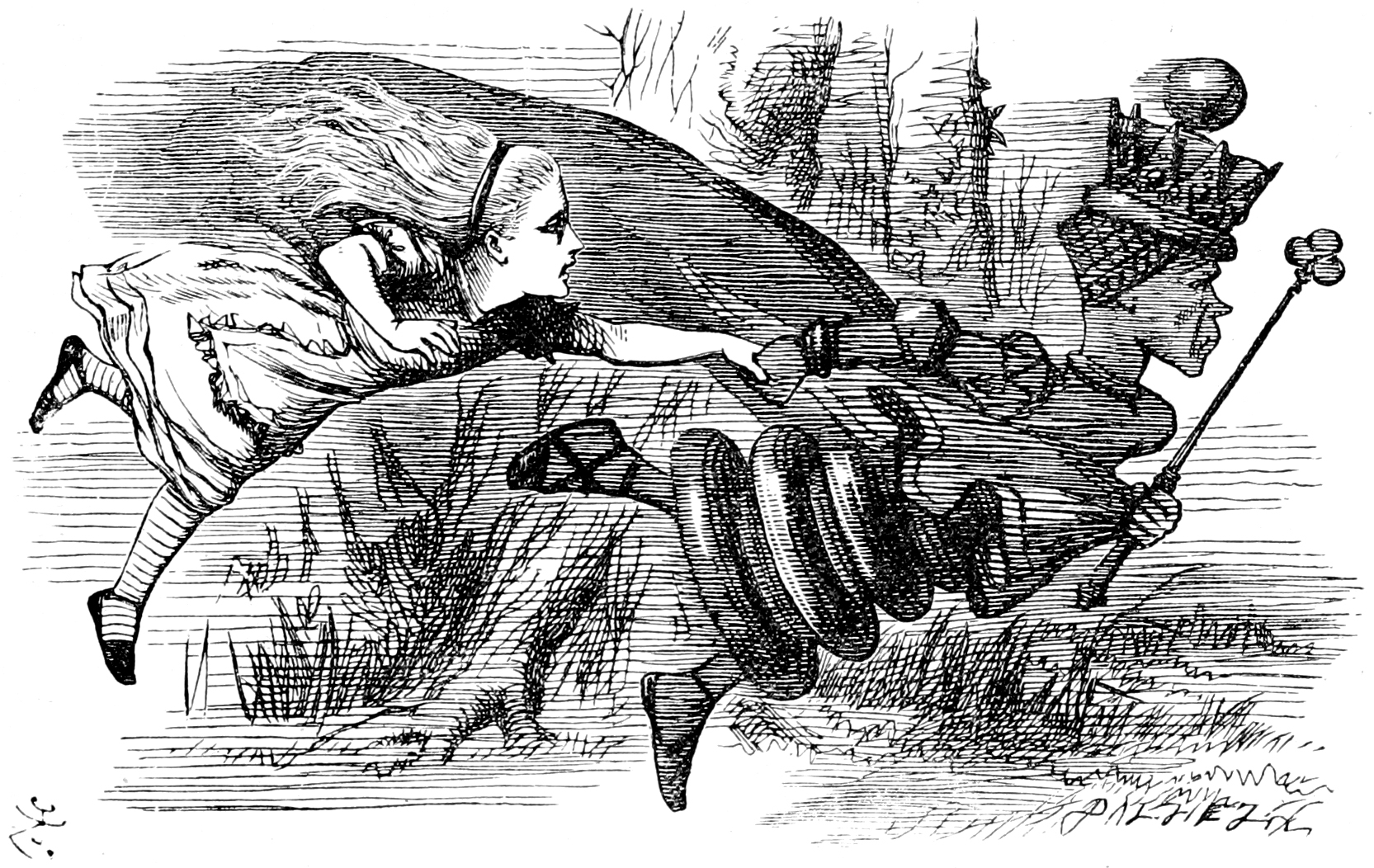
— Through the Looking-Glass, Lewis Caroll (1872)
I’m not against hustle, but when the hustle becomes an end in-and-of-itself, rather than a means to an end, that is alarming.
I’m reminded by a quote by a senior executive at the same company with the posters:
“Most companies fail not because they miss their goals. They fail because they hit all their goals, but it takes them right off a cliff.”
Before we plummet off of a cliff, let’s take some time to pause, reflect, and understand where it is we’re going. Then let’s grant ourselves the sustainable pace we need to get us there.
Food for thought, delivered to your inbox.
Maybe one email a month, if even that.
